
Building a Custom Home in Fort Langley: What You Need to Know About Heritage Rules
Custom Home Built to Fort Langley Heritage Guidelines
Key Points
- The Township of Langley has two heritage conservation areas, one in Fort Langley and one in Murrayville, and a Heritage Alteration Permit is typically required to alter, demolish or build within either one.
- A Heritage Alteration Permit must be issued by Council itself, not approved by staff, which adds meeting cycles that a standard building permit doesn’t carry.
- The initial application fee for a Development Permit and/or Heritage Alteration Permit under the Township’s Fees and Charges Bylaw is $3,690.00, with a supplemental fee tied to floor area for larger projects.
- Fort Langley’s heritage conservation area traces back to its history as BC’s first settlement, and the Fort Langley Community Plan maps the protected downtown core under the Local Government Act.
If you’re planning a custom home in Fort Langley, understanding Fort Langley heritage rules shapes your design before you draw a single wall. Fort Langley heritage conservation rules mean most new builds and major renovations inside its boundary need a Heritage Alteration Permit on top of the usual building permit, with its own timeline, fees and design limits.
We’ve built homes in Fort Langley long enough to know this process trips up even experienced homeowners. The village core isn’t zoned like the rest of Langley. A floor plan that sails through review in a newer subdivision can get sent back here over roof pitch or siding choice. Fort Langley is one of the few places in the province where the streetscape still reads the way it did generations ago, and the Township wants to keep it that way.
Fort Langley heritage rules touch everything from which properties fall inside the boundary to when you need a Heritage Alteration Permit, what the design guidelines control, and roughly how much extra time and money to budget. If you’re still choosing who to build with, finding the right builder who already understands this process will save you a redesign down the road.
What Makes Fort Langley a Heritage Conservation Area
Fort Langley is one of two heritage conservation areas in the Township of Langley, the other being Murrayville. Within these areas, a Heritage Alteration Permit is typically required to subdivide, alter or demolish existing buildings and structures, or to construct new ones.
The boundary isn’t arbitrary. The Fort Langley Community Plan designates the area shown on Map 2.pdf) as a heritage conservation area under the Local Government Act, with the stated purpose of protecting the heritage character of downtown Fort Langley. That designation didn’t come from nowhere, which is a big part of why the Township treats this village centre differently from the subdivisions around it.
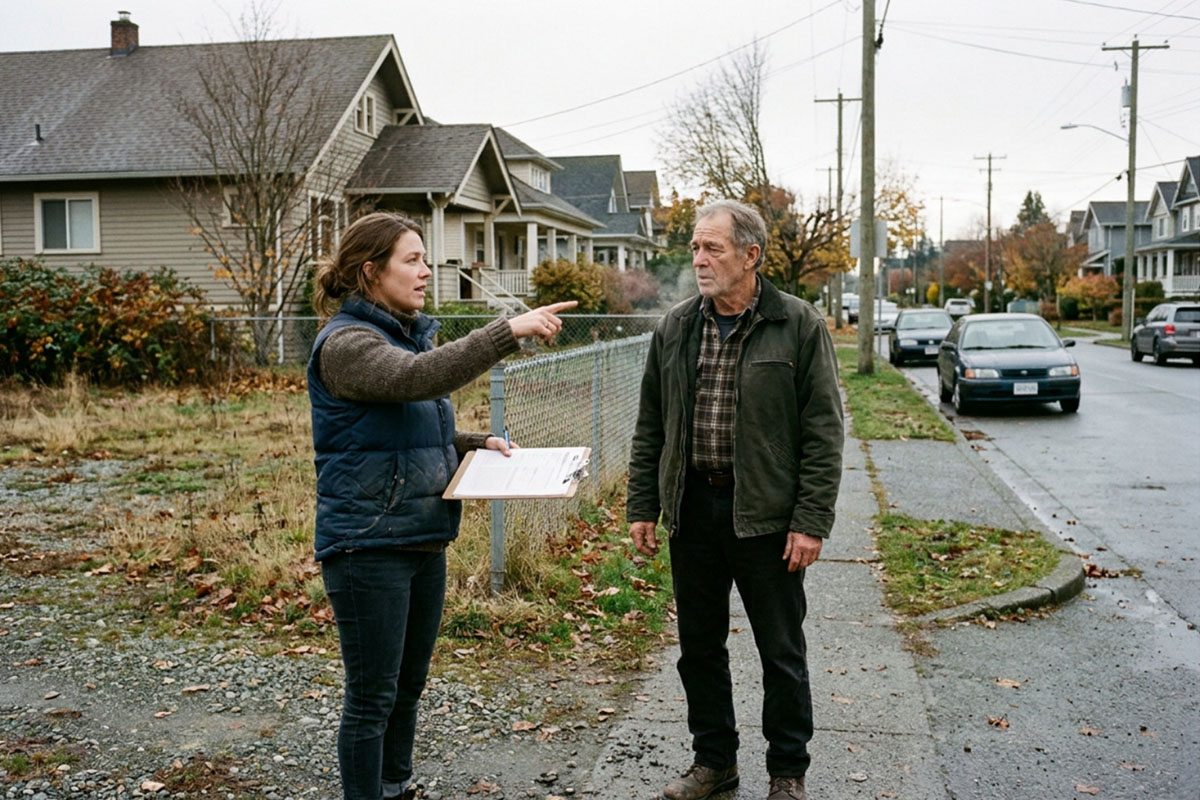
Not every lot in Fort Langley falls inside the designated boundary. Some properties a block or two off the main strip sit outside it entirely and face none of these extra requirements. Before you spend money on design drawings, confirm where your address lands on the map. We’ve walked clients through this exact question on past jobs, including a Fort Langley home we built where confirming the boundary early shaped the whole design process from the start.
When You Need a Heritage Alteration Permit
If your property sits inside the Fort Langley heritage conservation area, you almost certainly need a Heritage Alteration Permit before building in Fort Langley, whether you’re starting fresh or adding onto an existing house. The permit is typically required to subdivide, alter or demolish existing structures, or to construct new buildings within the designated area, which covers far more projects than most homeowners expect.
Confirming the Heritage Boundary Before Designing
It’s also required before any demolition, subdivision or redevelopment on a protected site, so clearing an old structure to make room for your new build doesn’t skip you past the review. It triggers it. One detail catches people off guard: unlike most development permits, which can be approved by staff, a Heritage Alteration Permit must be issued by Council itself rather than a delegated official.
That matters for timing and for expectations. A new custom home on a vacant or recently cleared lot in Fort Langley almost always triggers this review, not just renovations to a building that’s already heritage listed. If you bought a lot assuming a new build would be simpler than restoring an old structure, it usually isn’t. The permit follows the land, not the age of what’s sitting on it.
It’s worth knowing that a cleared or vacant Fort Langley lot doesn’t escape heritage review just because there’s no old building left to protect. The land itself carries the designation.
Heritage Alteration Permit vs Development Permit
A Development Permit and a Heritage Alteration Permit answer different questions, and in Fort Langley’s village core you’ll often need both reviewed at once.
Here’s how the two compare on what they cover and who approves them:
| Development Permit | Heritage Alteration Permit | |
|---|---|---|
| What it addresses | Form, siting and landscaping under the zoning bylaw | Protection of heritage character and streetscape |
| When it’s required | Most new construction and significant exterior changes | Altering, demolishing or building within a heritage conservation area |
| Who approves it | Can be approved by delegated staff | Must be issued by Council |
| Typical impact on timeline | Standard review cycle | Added Council meeting cycles |
The fee structure and approval authority differ enough between the two that they change your whole schedule. A Development Permit can move through staff review on its own clock, but once a Heritage Alteration Permit is in the mix, your project waits on a Council agenda. Plan your submission dates around that, not around a standard permit timeline.
What the Design Guidelines Control
The Township’s Fort Langley Building Facade Guidelines cover colour, roof lines and materials for the heritage area, so a new build reads as part of the historic streetscape instead of standing apart from it. These guidelines are specific expectations about how your home meets the street.
The Township’s goal with these guidelines is protecting how the village reads from the sidewalk, so a design that respects the overall streetscape tends to move through review more smoothly.
Budgeting Time for Heritage Permit Review
We’ve seen floor plans that would clear a standard Langley subdivision without a second look get sent back here over scale or material choice, things a typical review board wouldn’t flag at all. A steep modern roofline, a wide expanse of stucco, or windows proportioned wrong for the street can all trigger a redesign request even when the rest of the plan is solid.
The fix isn’t to fight the guidelines on your first submission. Design with them from the start: wood trim details, a roof pitch that matches its neighbours, a palette pulled from what’s already on the block. A design that respects the streetscape from the first sketch moves through review far faster than one that gets corrected after a rejection.
How Much Longer Does Heritage Review Take and What Does It Cost
Heritage review takes longer than a standard building permit because Council, not staff, has to issue the final approval. That single difference adds meeting cycles to your schedule that a straightforward Development Permit never carries, since your application has to land on a Council agenda rather than move through on a planner’s desk.
The fees follow a set structure. The initial application fee for a Development Permit and/or Heritage Alteration Permit under the Township’s Fees and Charges Bylaw is $3,690.00. A supplemental fee tied to gross floor area also applies, but only to larger commercial or non-residential projects, so most custom homes aren’t on the hook for it. For most custom home builds, that initial fee is the number to plan around early.
The permit fee is rarely the whole story on cost, though. Budgeting for heritage-appropriate materials, proper wood trim, approved paint colours, the right roofing profile, often adds real expense beyond what you’d pay on a standard build outside the designated area. These aren’t corners worth cutting, since a cheaper substitute is often exactly what gets a submission sent back. If you’re still working out what a custom build costs in Fort Langley, factor this extra layer in before you set a final budget.
Building in permit lead time at the start of your planning saves far more stress than trying to compress it later. Homeowners who treat Council review as an afterthought risk delays waiting on an agenda slot. Homeowners who plan for it from day one rarely notice the delay at all.
Ask your builder for a realistic submission-to-approval window based on past Fort Langley projects, not the Township’s published turnaround for standard permits, before you lock in a move-in date.
Interior Work and What a Heritage Permit Can’t Touch
Interior renovation work in a Fort Langley heritage conservation area home is generally not reviewed the way exterior changes are, though properties carrying an individual heritage designation can have interior elements protected too, so check your property’s status with the Township before assuming. Heritage review is aimed at what’s visible from the street and the public view, so gutting a kitchen or reconfiguring interior walls generally falls under a standard building permit rather than the Heritage Alteration Permit process.
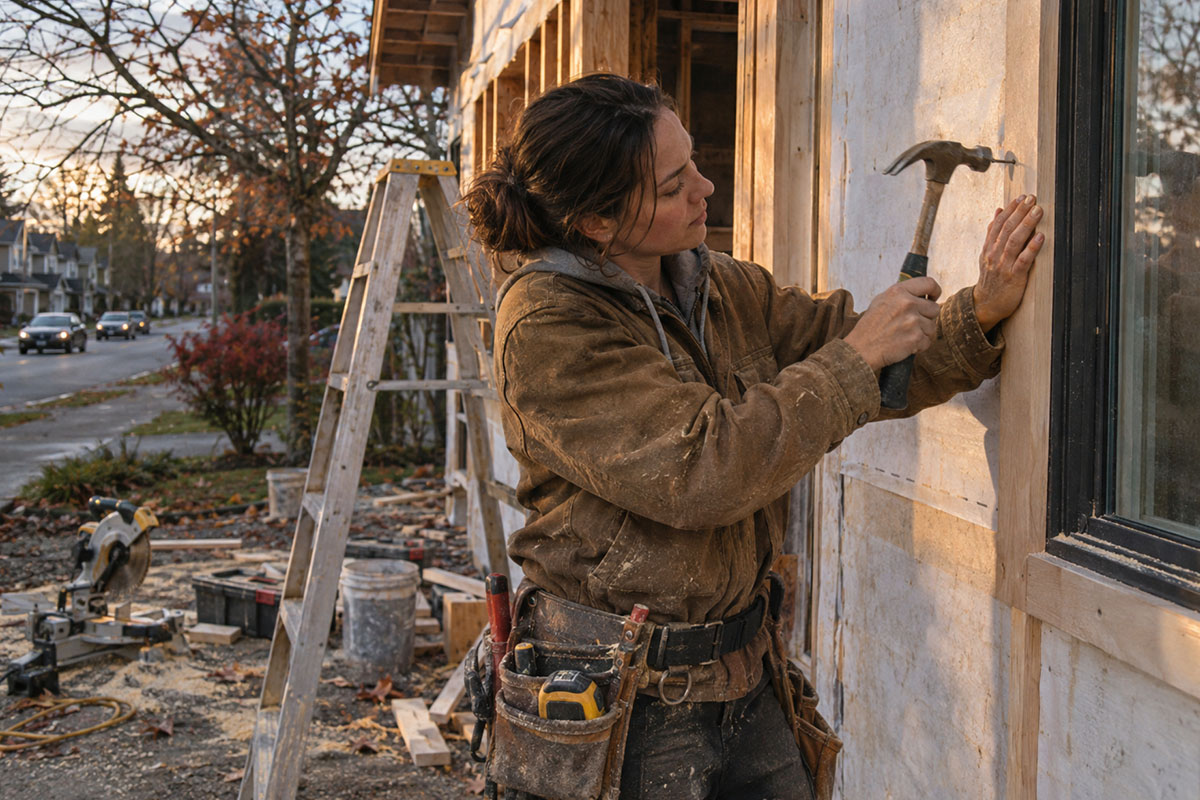
Heritage Appropriate Trim Detail Under Construction
A Heritage Alteration Permit can vary or supplement other land use bylaws, so it can adjust things like height or siting to allow a heritage-appropriate design that a standard zoning bylaw wouldn’t otherwise permit. What it cannot do is change the use or density of a property. That stays fixed under the zoning bylaw regardless of heritage status.
This split matters if you’re buying an older Fort Langley lot hoping heritage flexibility will let you add a suite or increase density. It won’t. The permit can bend a setback or a roofline in your favour, but it has no power over how many units or what use the zoning bylaw allows on that parcel. If you’re weighing whether to renovate an existing structure or start over, our page on renovation versus new build walks through how that decision plays out on a heritage lot.
Who to Contact and Where the Rules Are Headed
Start with the Township of Langley’s planning and development department before you finalize a design, not after. Staff there deal with Fort Langley heritage applications regularly and can confirm whether your lot sits inside the designated boundary and what kind of pushback a particular roofline or material choice is likely to get.
Bring something concrete to that first meeting. A survey of the lot and rough concept drawings let staff flag heritage concerns on the spot rather than after you’ve paid an architect for a full set of plans.
A builder who understands how the Township approaches these applications is worth more here than a generic contractor. That’s part of the Wescraft difference, knowing the process well enough to catch a problem before it costs you a redesign.
Confirm the current version of the guidelines before you design, rather than relying on a copy a neighbour handed you two years ago. A rule that applied to their build may have already changed by the time you submit yours, and finding that out mid-permit is a far more expensive way to learn it.
Building a Custom Home in Fort Langley the Right Way
The right way to build a custom home in Fort Langley starts with walking the lot alongside a builder who already understands the heritage review process, before a single floor plan gets finalized. A builder who’s been through Council review before knows which design choices sail through and which ones invite questions, and that knowledge belongs in your first conversation about the property, not your third redesign. Choose materials and massing that work with the guidelines from the first sketch: a roof pitch that already matches its neighbours, trim details pulled from what the streetscape already shows, a palette that reads as part of the block rather than apart from it. Budget both time and money for the extra review layer from the start, not as an afterthought once your contractor mentions it.
If your lot sits inside the boundary, the single best decision you can make is choosing a builder who’s walked this process before and can tell you early what will pass and what won’t. That saves you money on redrawn plans and months waiting on an agenda slot for a design that was never going to clear review.
If you’re planning a custom home or major renovation inside Fort Langley’s heritage conservation area, contact our team to talk through your lot and what the process will look like for your project.
Frequently asked questions
Are Langley and Fort Langley the same place?
No. Langley refers to the broader Township of Langley, while Fort Langley is a specific village within it, home to one of the Township’s two heritage conservation areas. The distinction matters for permits, since Fort Langley’s design rules don’t apply across the rest of Langley.
Do I need a Heritage Alteration Permit for a new custom home on a vacant Fort Langley lot?
Yes, a Heritage Alteration Permit is typically required for a new custom home on a vacant lot inside the boundary. It’s required to construct new buildings within the heritage conservation area, not just to alter existing ones, so a vacant or cleared lot inside the boundary still triggers the review.
How much does a Heritage Alteration Permit cost in Fort Langley?
The initial application fee for a Development Permit and/or Heritage Alteration Permit under the Township’s Fees and Charges Bylaw is $3,690.00. A supplemental fee tied to floor area also exists, but it applies to larger commercial or non-residential projects, not typical custom homes. Budget beyond that for heritage-appropriate materials like approved trim and paint.
Can a Heritage Alteration Permit let me add a suite or increase density on my lot?
No. Heritage Alteration Permits can vary or supplement bylaws covering things like height or siting, but they cannot change a property’s use or density. That stays fixed under the zoning bylaw regardless of heritage status.
Does interior renovation work need heritage approval in Fort Langley?
Generally not. Heritage review focuses on what’s visible from the street and the public view, so interior renovations typically fall under standard building permits rather than the Heritage Alteration Permit process that governs exterior changes.
Will Fort Langley’s heritage guidelines change soon?
Guidelines can change over time, so confirm you’re working from the current version before finalizing a design rather than relying on an older copy.